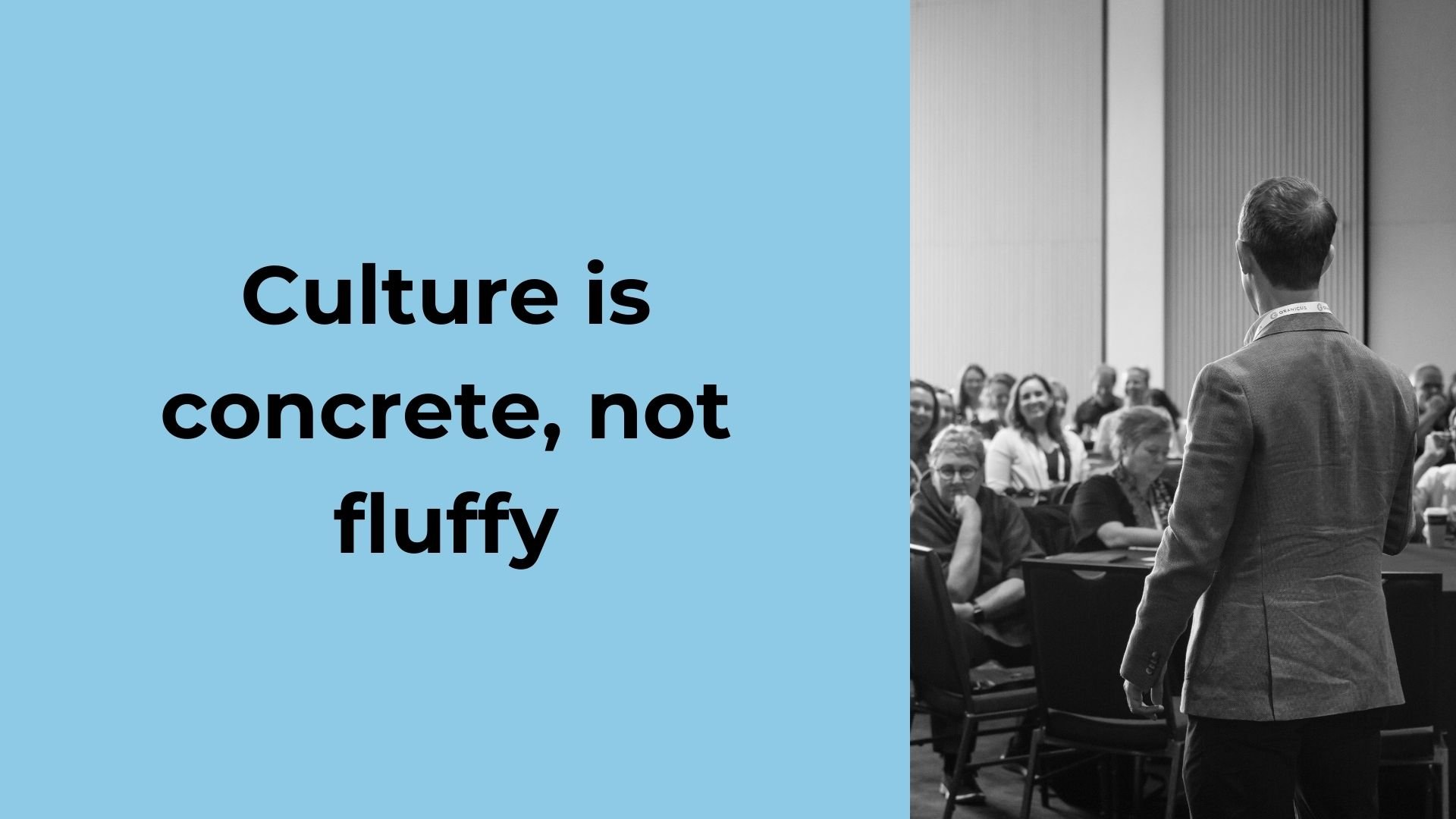
Culture is concrete, not fluffy
I'm in Melbourne this week and they do some strange things here.
Our taxi is about to turn right on a major downtown street, when suddenly the driver screeches into the left side of the intersection to wait for the straight traffic to pass. What is this guy doing!?
Turns out it's a "hook turn". It's a Melbourne thing.
Later, I'm in the hotel pool and I'm the only person not glued to my phone while swimming. (And no, they're not even young people.)
One is scrolling Insta; one is playing Tetris; another is checking emails.
Another Melbourne thing? Is that just part of the culture? The way they do things here?
"Culture is the strange things they do in other places." - Sean Thomas
Meanwhile, I've been interviewing people for a new programme called The Leaders Impact Circle and it's been fascinating.
Many of them spoke about the culture challenges inside their organisation.
"We've got a really toxic culture," said one.
"We're so bureaucratic here, it's infuriating", said another.
"The culture is just so risk-averse and whenever I suggest a change somebody further up the chain blocks it. They're so scared of such small risks." added another.
We blame culture to avoid changing it
Now, you may not like me for this but here goes.
I reckon those statements are sneaky ways we abdicate responsibility for crummy things in our workplaces.
We blame this great big vague thing called culture. It's toxic; it's risk-averse; it's hierarchical... whatever.
We can't fix such a vague issue like that, can we? Culture is just too big; too amorphous; too out of our hands.
So we throw our hands up and tell ourselves it's too hard and "it's just the way we do things around here".
It's a natural protective instinct. It keeps us safe, but at what cost?
Culture is concrete
It's impossible to shift culture when it's this great big vague thing. But it doesn't need to be that way.
In The Question Effect, I build on the work of Meredith Wilson and define seven elements of culture we can work on:
- Gatherings
- Rituals
- Actions
- Stories
- Symbols
- Environments
- Decisions
Those things are not vague. We can point to them - and we can work on them, bit by bit.
So, here's my challenge to you...
If you're tired of "the way things are done here" then get specific.
Which of those elements are frustrating you?
And what's a little experiment you could run to change it?
Try something different, see what happens, learn from it - and go from there.